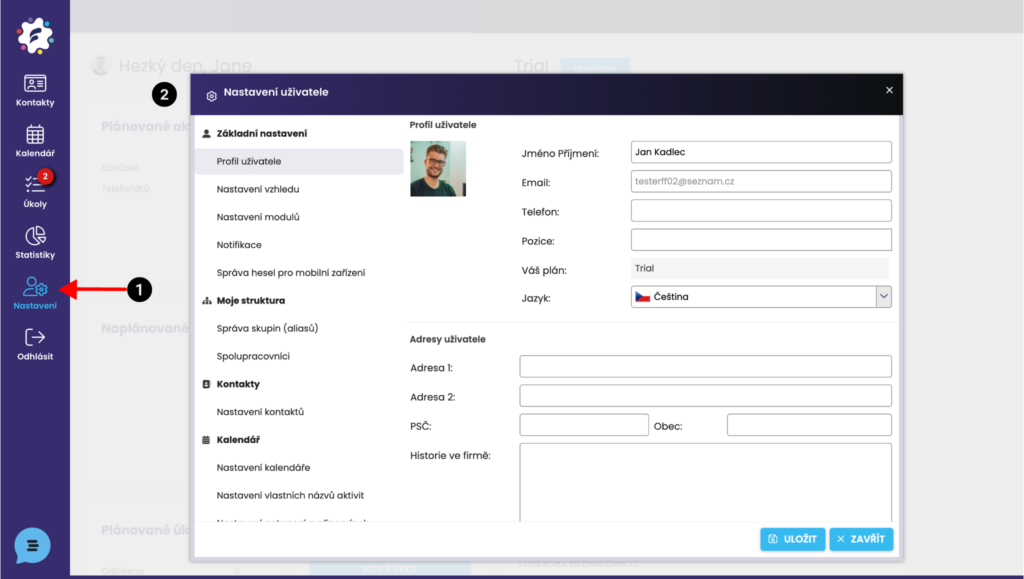
When you click on the Settings module (1) in the left panel, the User Settings window (2) will open.
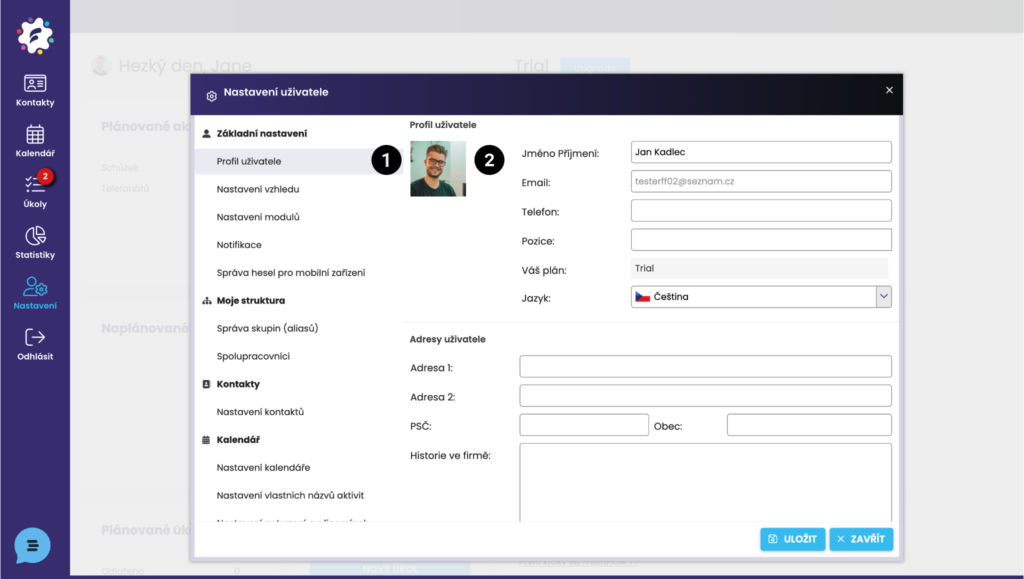
The first box is User Profile (1). Here you can edit user details (phone, FreshFlow plan, addresses, company history, etc.). If you click on the image area (2), you can then upload a photo or picture right from your computer.
In Appearance Settings (1) you can adjust how the system is displayed (2) – Narrower rows in contact and task tables (lists), showing a certain number of records that appear on one page (e.g., how many contacts are listed per page), or turning on automatic formatting in notes (for tasks or activities).
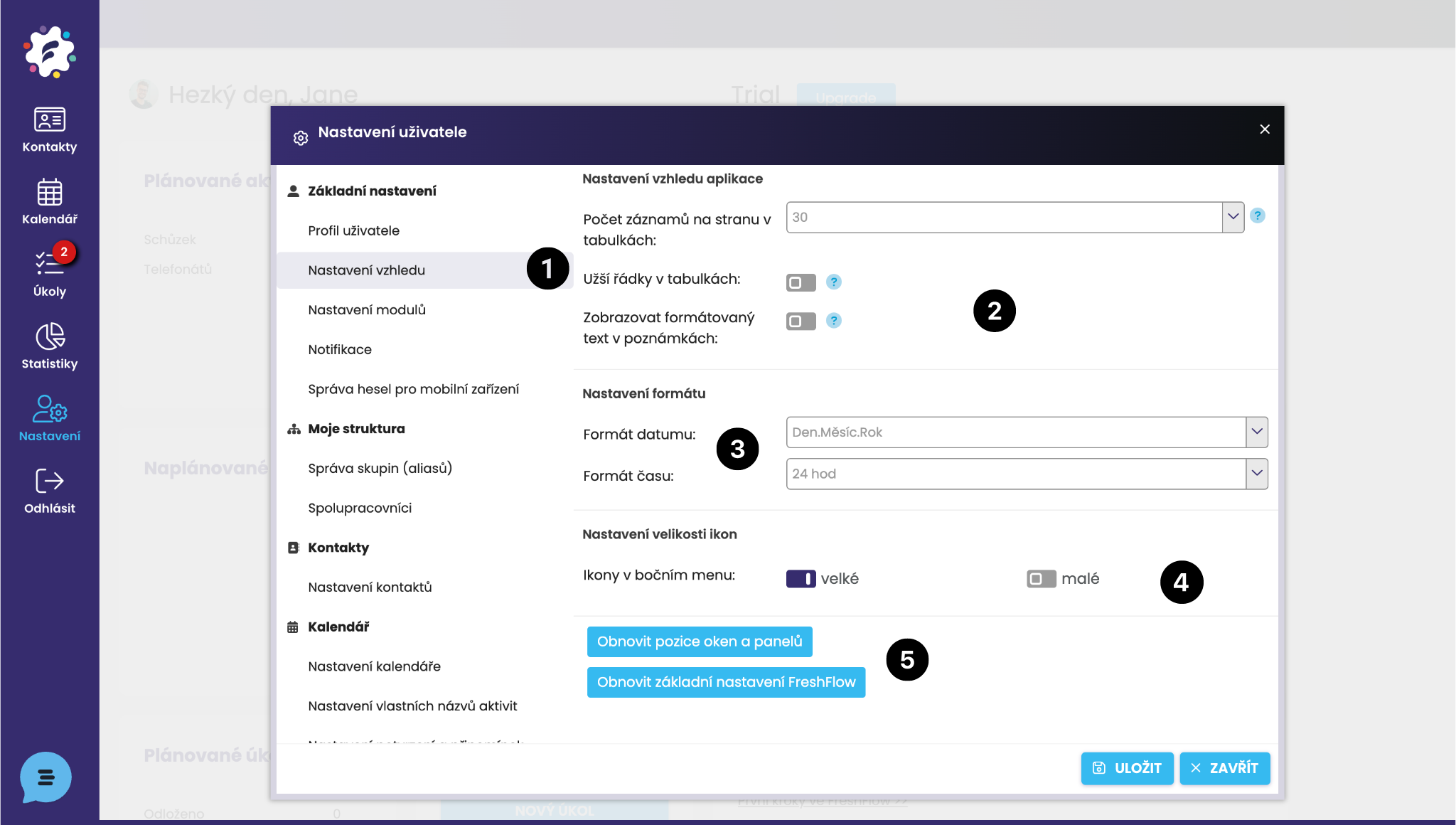
You can also set up the date and time format (for example, European, American, or 24-hour vs 12-hour time) (3).
Icon settings (4) – choose if you want icons in the left sidebar (Contacts, Calendar, etc.) to be big with labels or just small icons without labels with a slimmer bar.
Restore defaults (5) – Reset the position of windows and panels (if you set them differently) or just Restore default FreshFlow settings (returns to default values)
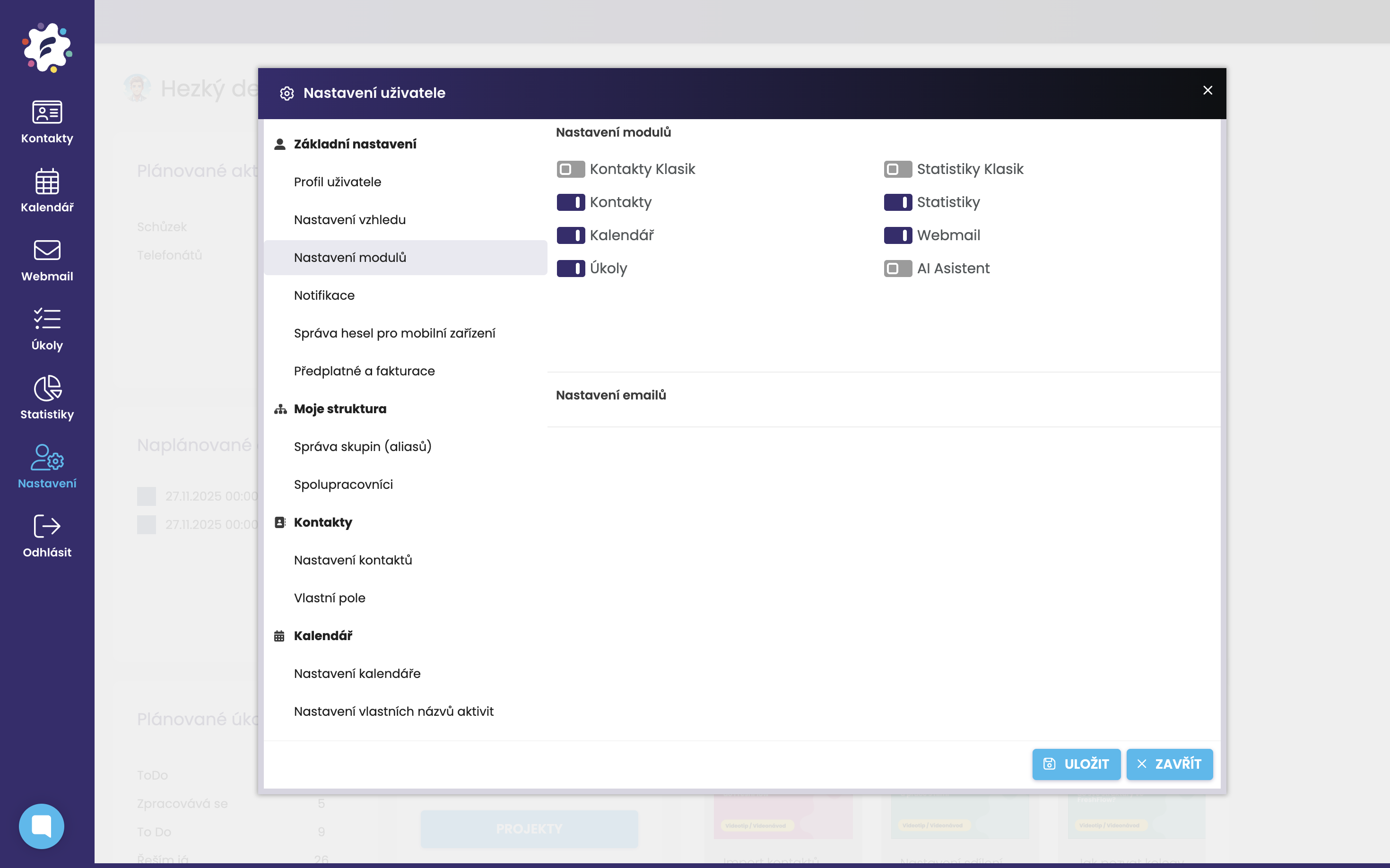
In the Modules Settings section, you can choose which modules you want to hide and which ones you want to have available. For example, the Webmail or AI assistant modules aren't automatically enabled after registration, so you need to turn them on if you want to use them.
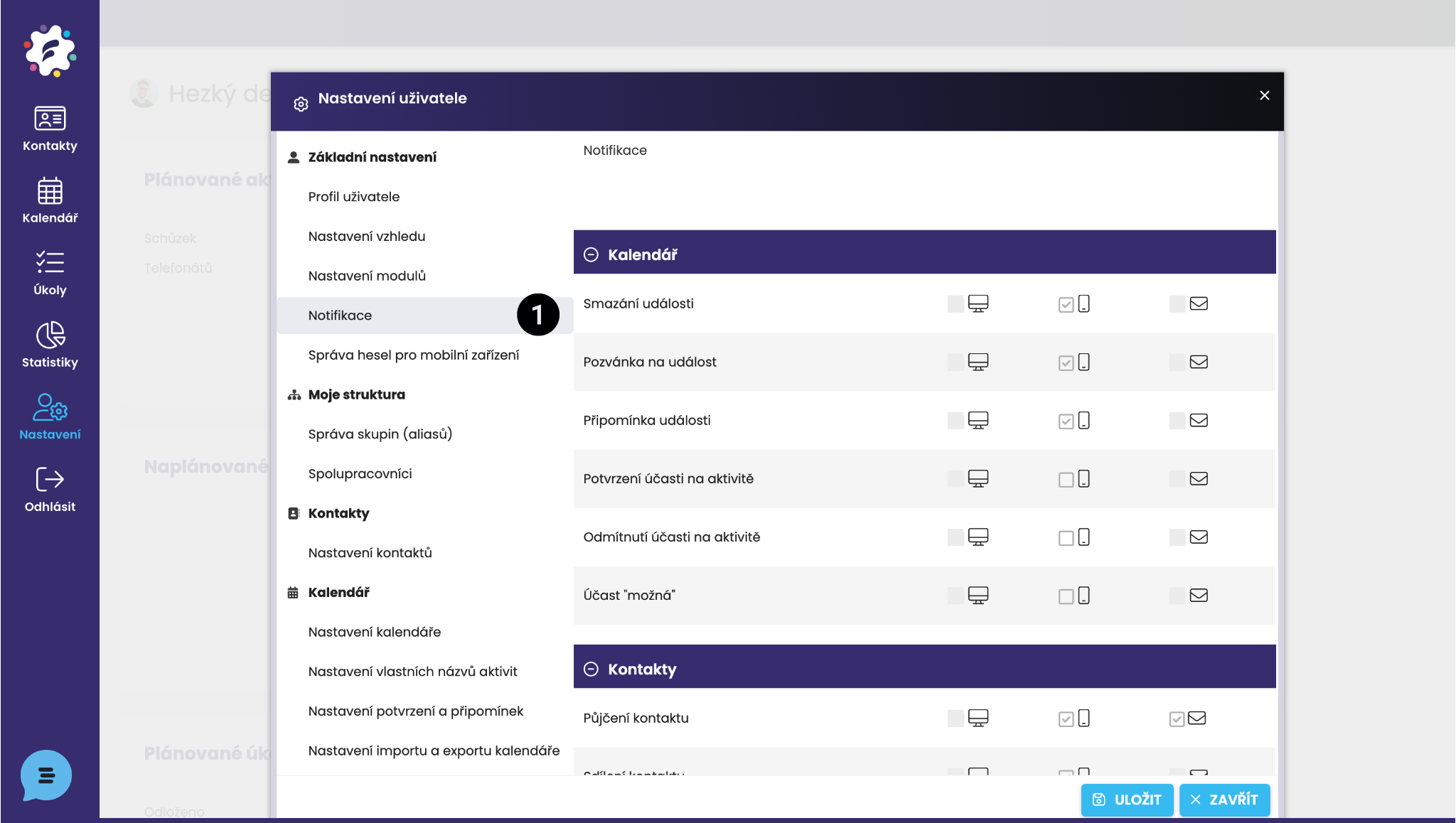
In the Notifications section (1), you can set up which notifications you want to receive in the web app, the mobile app, and by email.
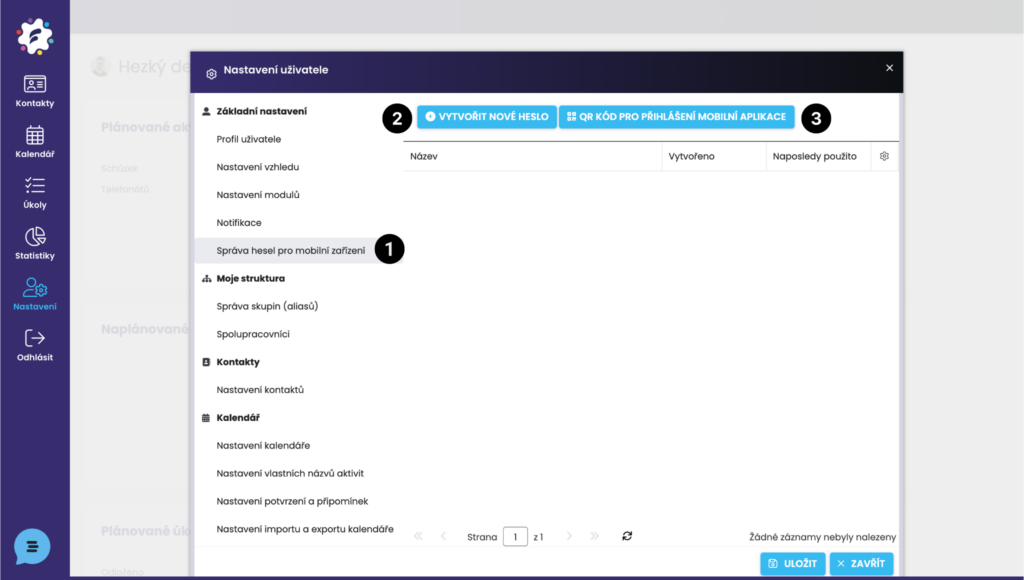
In the Password management for mobile devices section (1), you can create a password to use for the mobile app (2).
You can also generate a QR code to sign in to the mobile app (3). In the mobile app, just tap “Sign in via QR code”, scan the QR code generated in the FreshFlow web app and you'll be logged in to the FreshFlow mobile app.
You can also see a list of all passwords created so far (for mobile devices) in Password management (1), and remove existing passwords.
We cover logging into the mobile app in more detail in a separate article: HERE
You can find a separate article on how to pay for FreshFlow HERE.
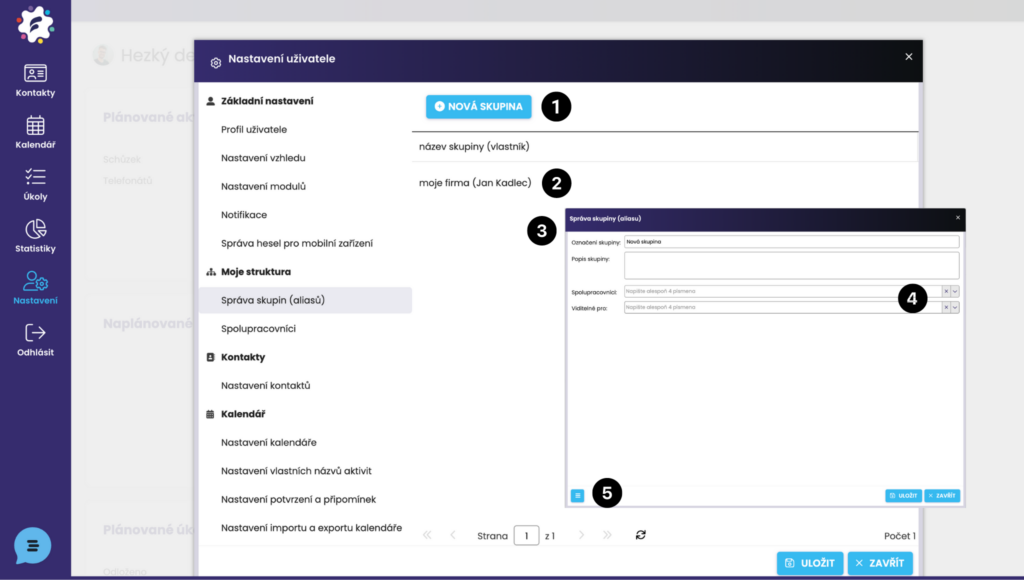
Group management – here you can create new groups (1) or edit existing ones by clicking on the group name (2). A dialog window called Group management (3) will open. Here, you can make the changes you want, add coworkers and visibility (4), then click Save. If you want to delete the group, click the three-line icon at the bottom left (5) and choose Delete.
We cover groups and how to use them in a separate article HERE
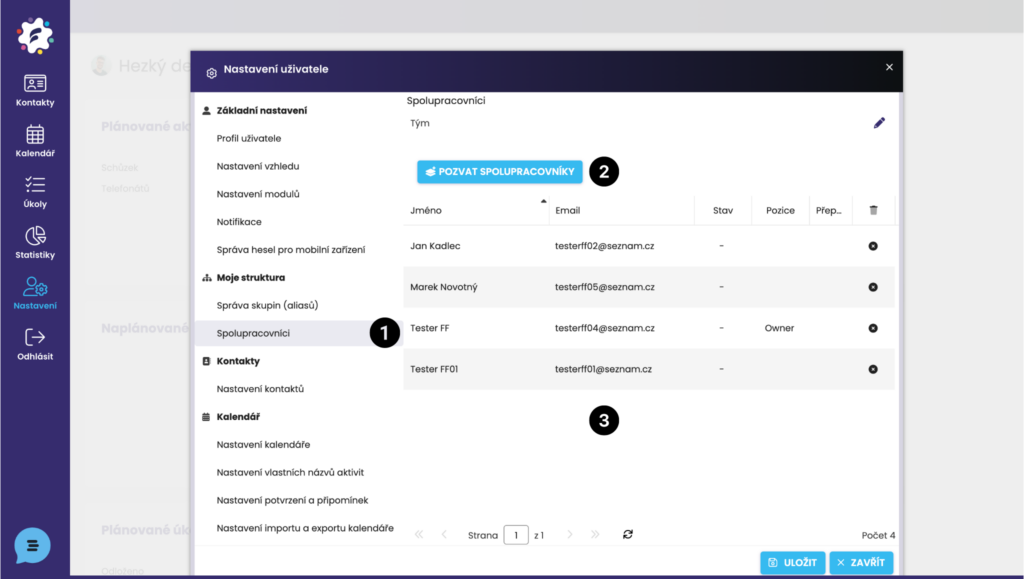
In the Collaborators section (1), you can add colleagues to your structure in FreshFlow to use shared features together (like calendar sharing, joining activities together, etc.).
When you click the Invite Collaborators button (2), a window pops up where you enter the user's email and send the invite. The invite will be sent to their email, where they can accept it.
NOTE: You can't add a user who is already part of another structure.
The new collaborator will then show up in your list of collaborators (3)
You can get help videos for adding users to the structure HERE.
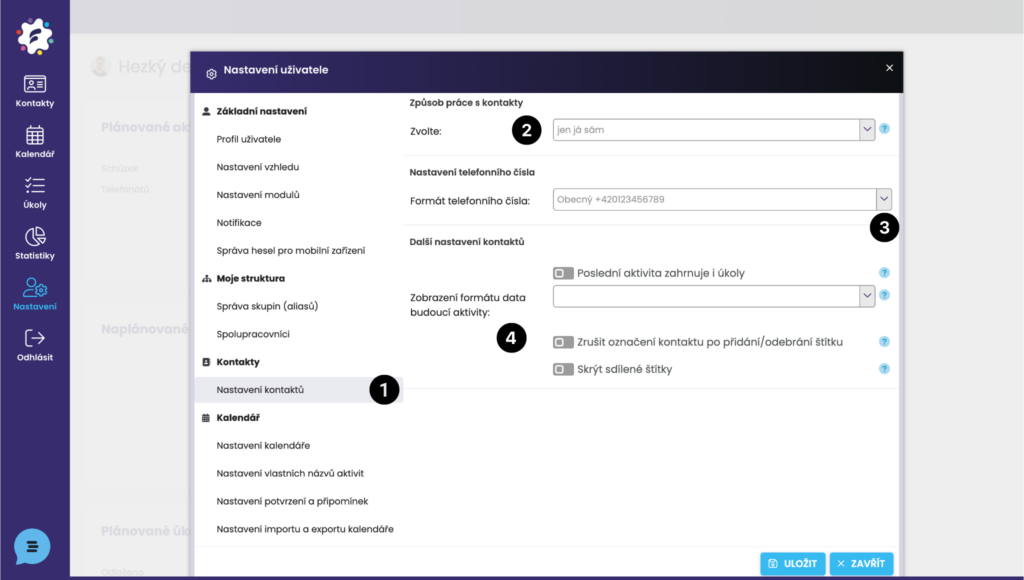
In this box (1), you can set how you're going to work with contacts (2):
By choosing the option "Just me" you'll only see your own contacts, either the ones you add to FreshFlow yourself or the ones others share with you.
The second option is "everyone in the company" – you'll see (and be able to work with) contacts throughout the whole structure below you.
You have the option here to set the phone number format. If you're only working with Czech numbers, we recommend choosing the International format because it can create spaces between numbers, even if you paste the phone number into FreshFlow as one long string.
You can also set up different display options in the Contacts module, such as showing a task as the last activity in the contact database overview, or choosing the date format for future activities (like the full date or how long until the activity takes place).
How to create custom fields is covered in a separate article HERE.
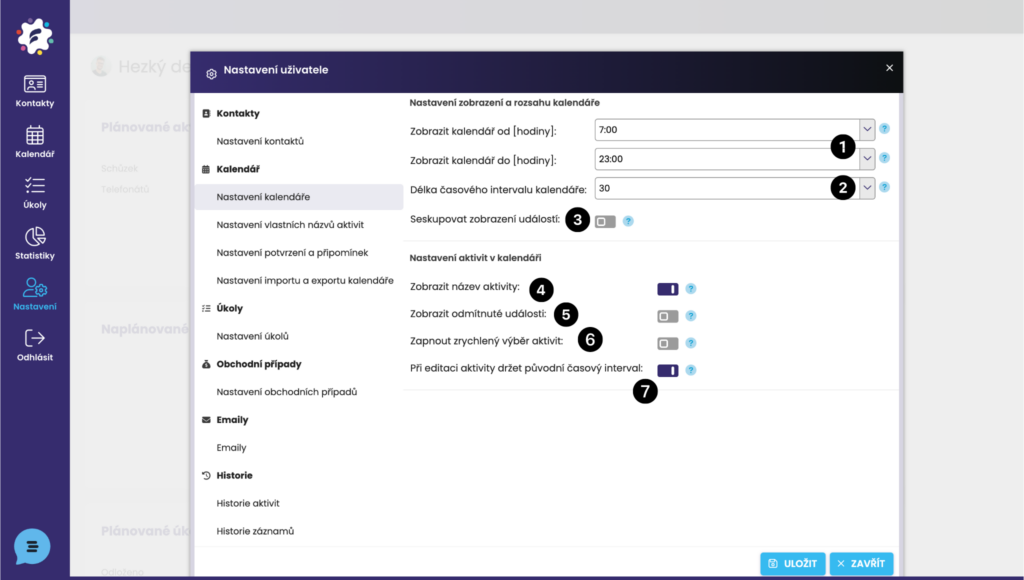
You can customize the calendar view range from – to a certain hour (1).
Calendar time interval length (2) – pick if you want to see the calendar in 15, 30, or 60 minute slots.
Event grouping (3) – set whether activities happening at the same time will overlap in the calendar or be listed next to each other (grouped).
In Calendar settings, you can turn the display of activity names (e.g. Phone call, Meeting...) on or off (4).
(5) If you decline an event invitation, it will still stay in your calendar.
Turn on quick activity selection (6) – a way to add activities to the calendar -> you don't have to fill out the type and the activity separately. You can also add tasks this way. (First, you'll get a window where you fill in the type of activity, or a specific activity (from a list of your most recently entered ones).
(7) If you change the time of an activity, the system will automatically keep the original time interval (for example, if the original time interval was 2 hours, the edited activity time will also be 2 hours).
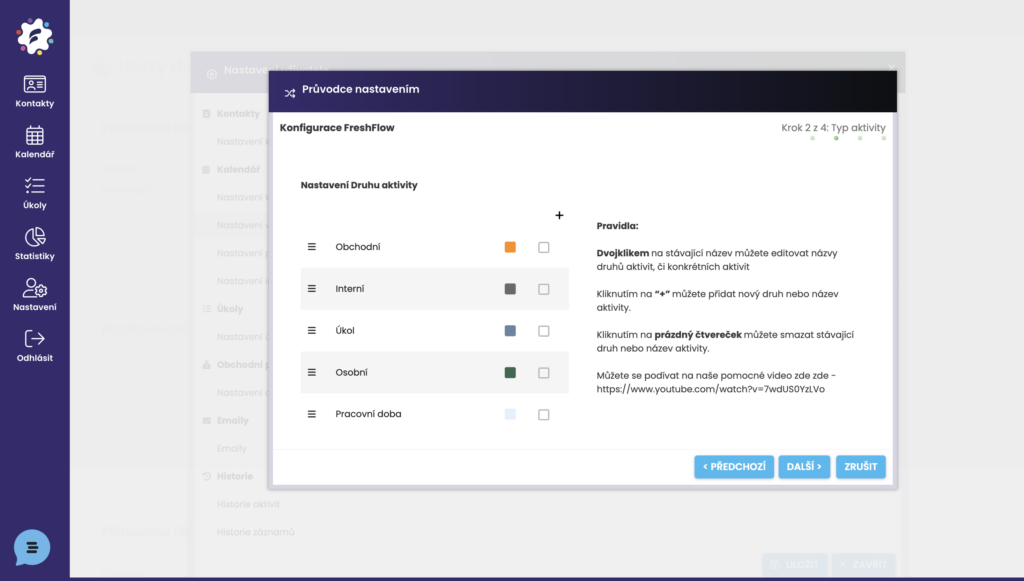
In the module for setting up custom activity names, you can adjust the predefined types of activities, activities, and their outcomes according to your needs. Thanks to the preset activities and results, the system can generate valuable statistical data.
We go into detail about the process of setting up custom activity names HERE in a separate article and video.
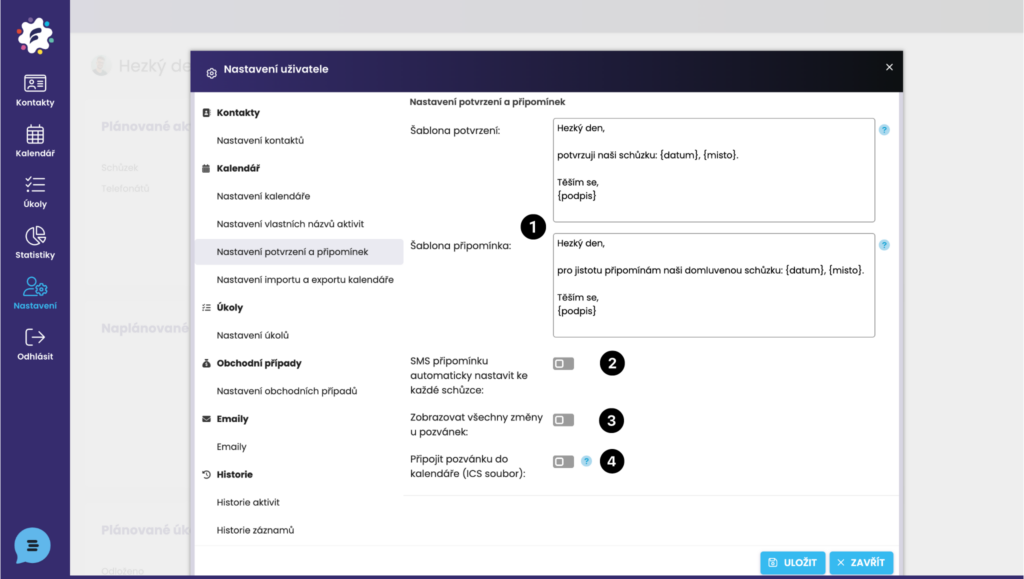
(1) Reminders and confirmations for client meetings – templates – here you can edit the default template text that is then sent to clients when you set up a confirmation or reminder for an activity. You can also edit the text of confirmations and reminders for a specific event directly in the event card.
(2) An SMS reminder will be sent for each meeting.
(3)
(4) The invitation will be sent as an email attachment and once opened, it will automatically appear in the client's calendar.
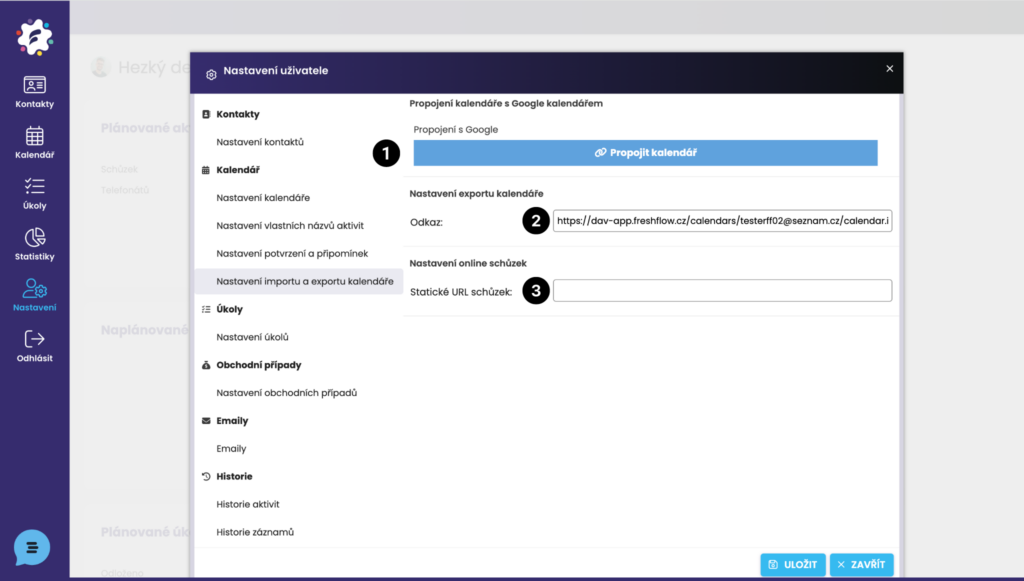
(1) Link to connect the FreshFlow calendar with Google Calendar.
You'll use the export calendar link (2) if you want to back up calendar data or connect it with another calendar.
We dive into how to create custom fields in a separate article HERE.
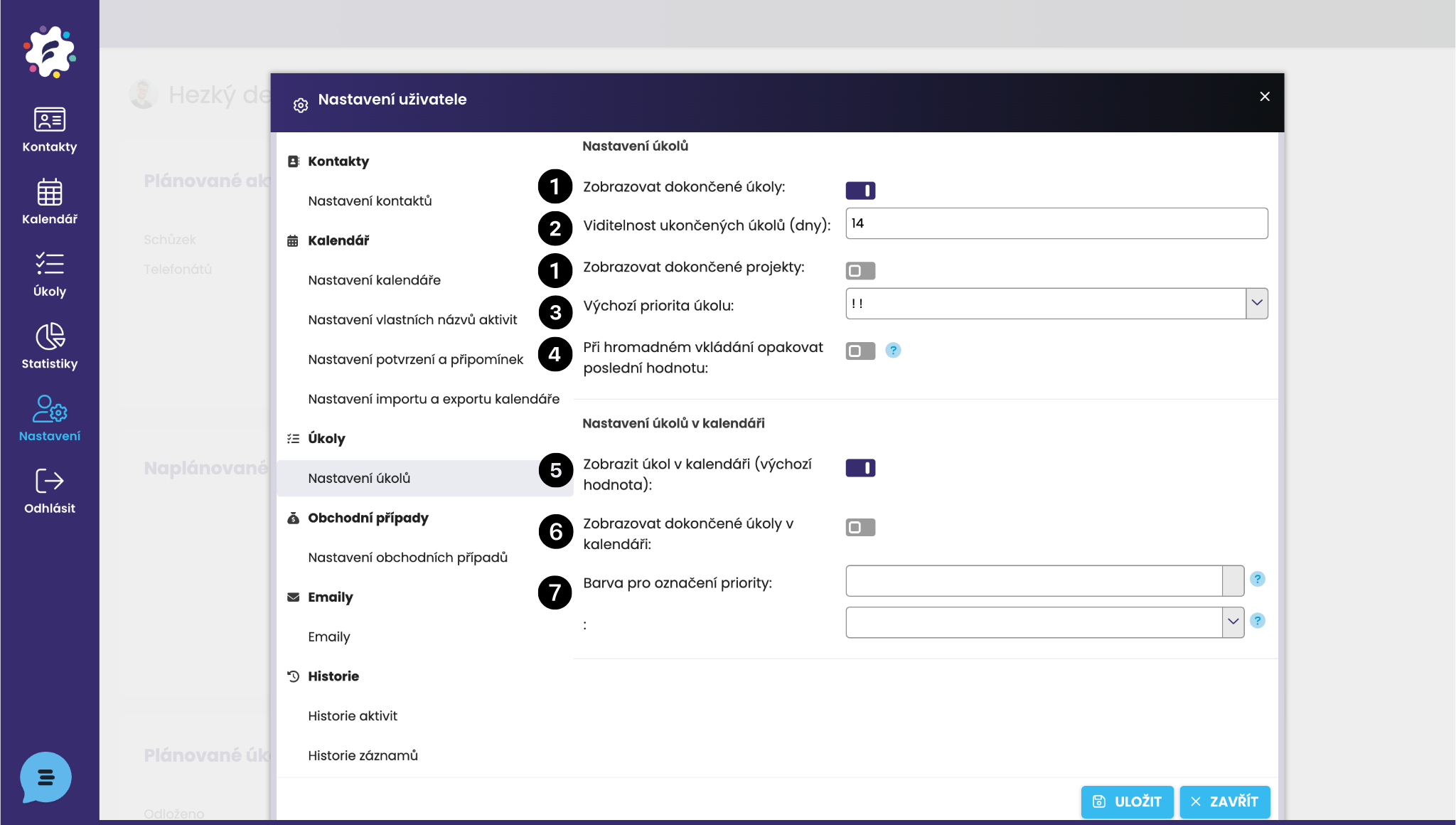
(1) Show completed tasks/projects – if you want completed tasks/projects to always be shown in the tasks module, check this option.
(2) Visibility of completed tasks – if you want completed tasks to be visible only for some time after they're done, set it here.
(3) Default task priority – you can set what should be filled in by default.
(4) If you're adding several tasks in a row – you can turn on “repeat last value,” so it will automatically fill in the same contact (client) and project, if you're making tasks for a project.
(5) Show task in calendar – sets the default value for a new task (you can adjust it individually for each task later)
(6) Show completed tasks in calendar – again, you can set this as the default value and also tweak it individually in each task's details
(7) Priority – set your color and style for priority marking in tasks – this will show up in the tasks displayed in the calendar.
How to create custom fields is covered in a separate article HERE.
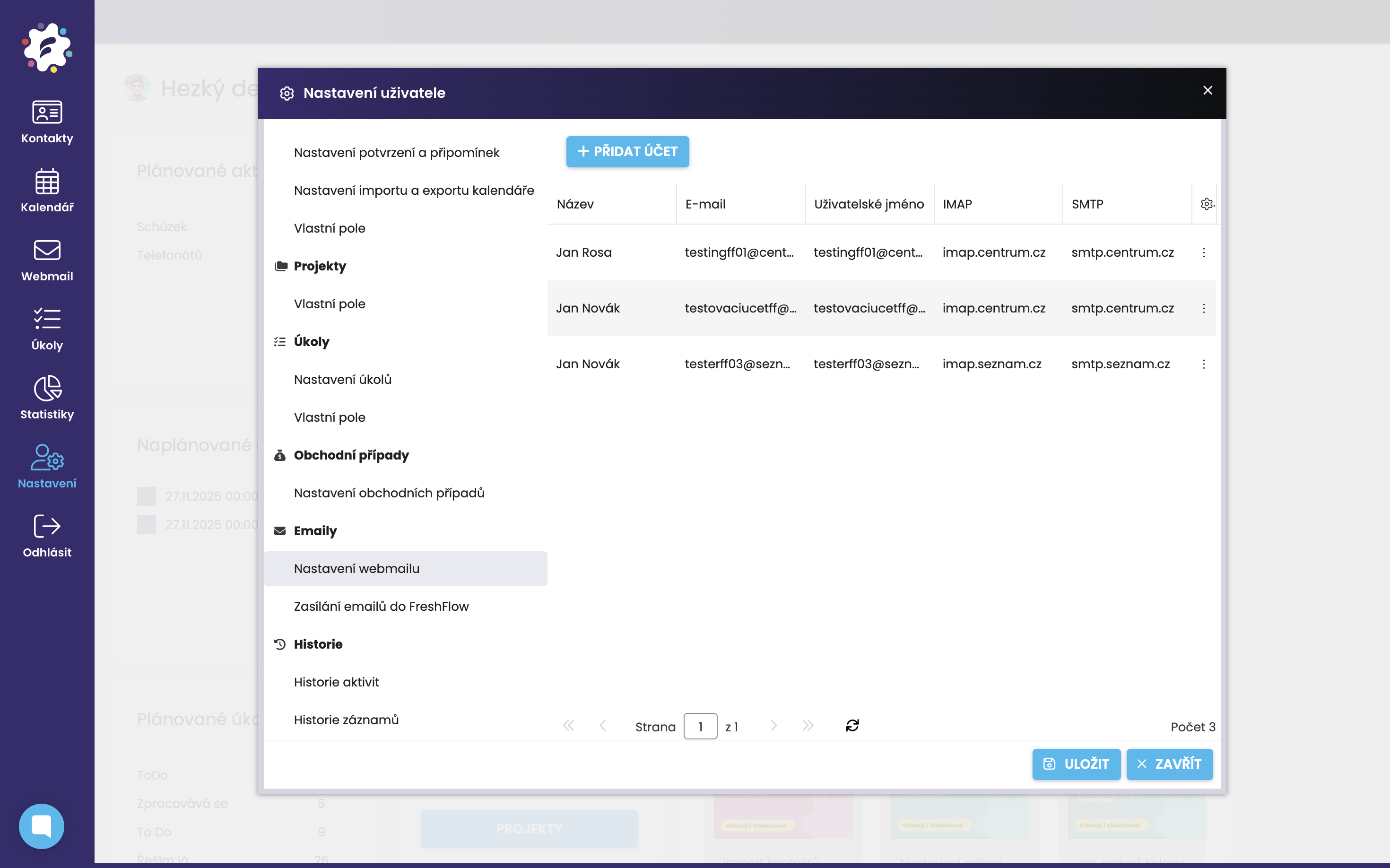
This box is for connecting your email inbox to FreshFlow. You can find the process in a separate article HERE.
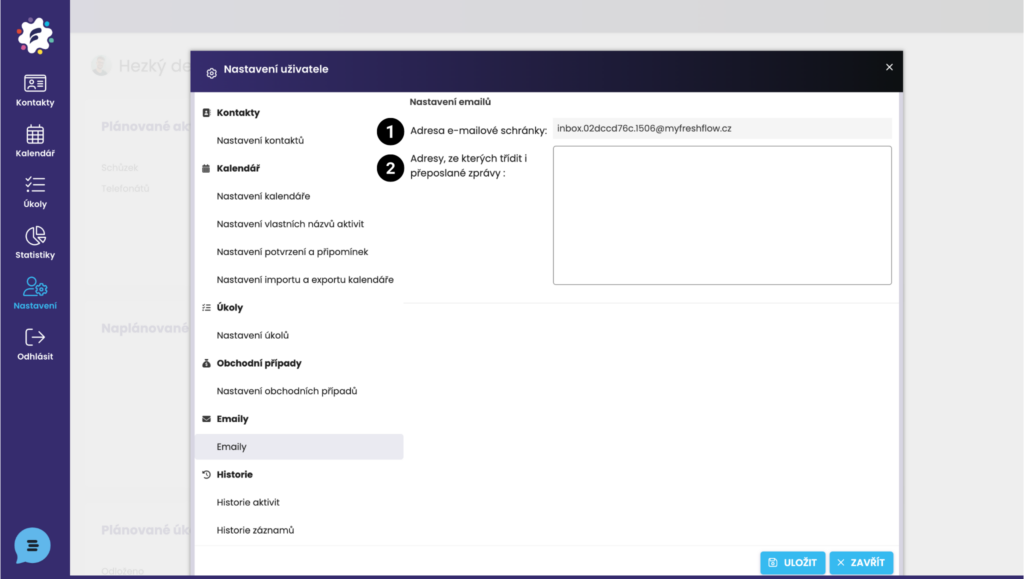
(1) Your FreshFlow address, where you can forward emails so they'll be assigned to the client, into their card in the CRM Light solution FreshFlow.
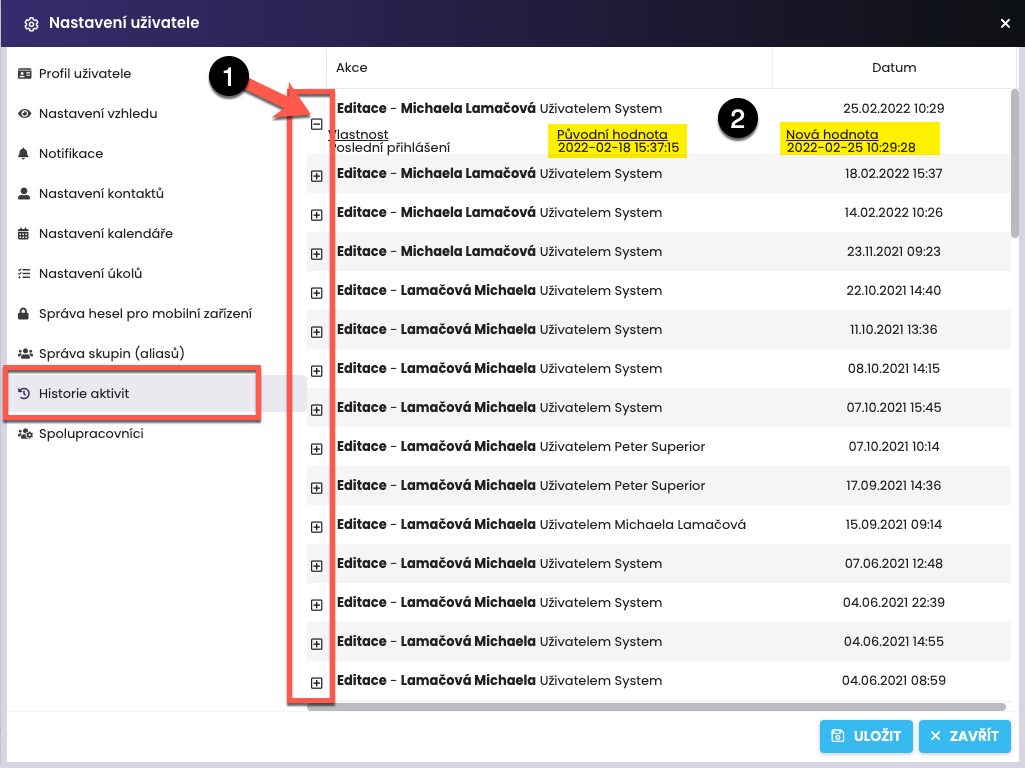
In the Activity History tab, you can find out what the logged-in user edited in the system and when the change was made (date and time). By expanding the plus sign (1) for each activity, you'll see the original and new values recorded (2).
